Category Archives: buildings

Camera with a View

I am an admirer of some of the great masters of early photography. It was not only their vision that made the work great, but in many cases, the types of equipment used. They didn’t have the huge array of advanced cameras to choose from, like we do today. Things were a lot more primitive. 


One of my favorite early photographers is Edward Weston. He shot with an 8×10 view camera. Can you imagine a finished 8 inch by 10 inch negative? His black and white prints are exquisite, and have a tonal quality and sharpness that is hard to describe. In 1978, I had the pleasure of attending a photography workshop in Carmel, California, where I studied under his son, Cole.


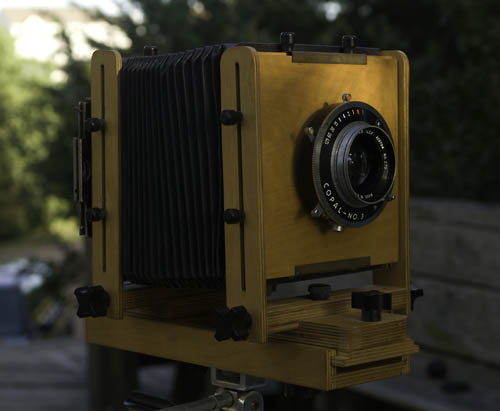
Working in 35mm, I could see the superior quality of large format photography. I examined gallery prints made by Ansel Adams, Edward Weston and his sons Brett and Cole, among others. When I got back home on the east coast, I wanted to apply some large format in my own work. View cameras are expensive. But when I saw an ad in American Photographer  for a kit to build my own 4×5 view camera, I jumped at the chance. For $85, it included the lens plate, ground glass, bellows, shifts and tilts, everything except a lens. My friend Allen Jones who was attending RIT at the time, scored my Ilex Acuton 215mm lens for $250 in Rochester.
 

camera

The assembled 4×5 view camera kit, designed by architect, Les Fader


Using the finished camera became a learning experience, and I made some mistakes. There were issues with light leaks between the film holders and the camera, and sheet film developing techniques, but I eventually kinda got the hang of it. On the windy, often stormy conditions of the Outer Banks, the bulky view camera has it limitations. So I used it mainly for still life compositions around commercial fishing harbors. 
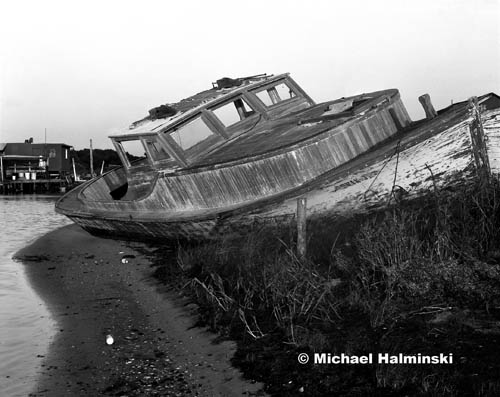


EdwinJr

The “Edwin Jr.” derelict at Avon Harbor
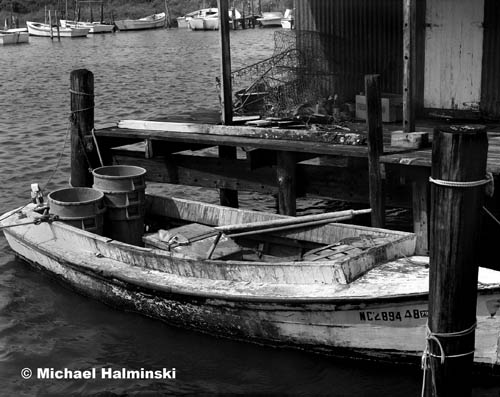
 

crabber

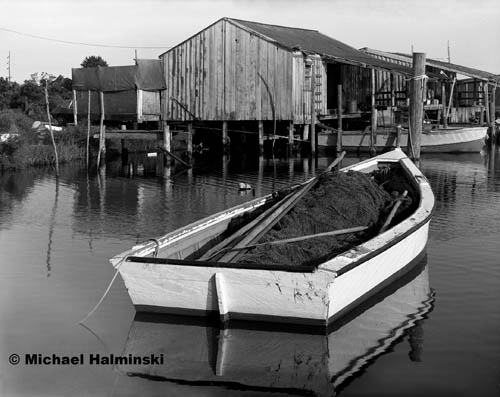
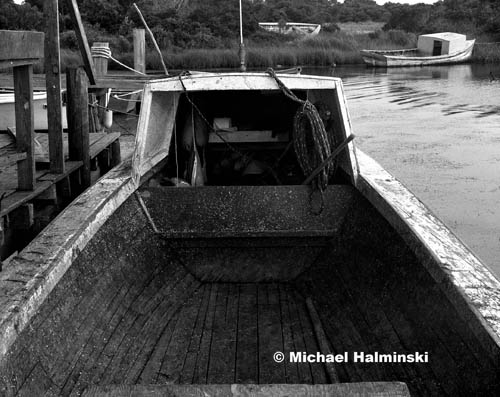
Crab Skiff at Avon Harbor


net skiff

Net Skiff, Rodanthe Creek


shad boat

Shad Boat, Rodanthe Creek


Collins Gray

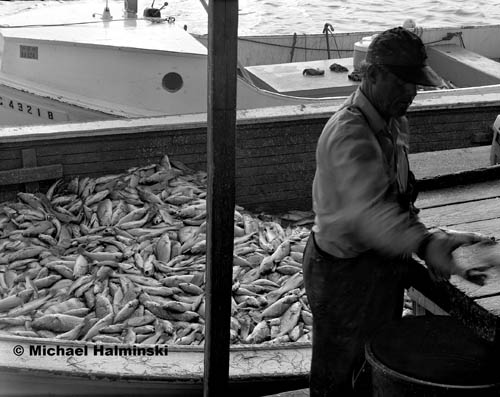
Longhauler, Collins Gray at Rodanthe Fish House
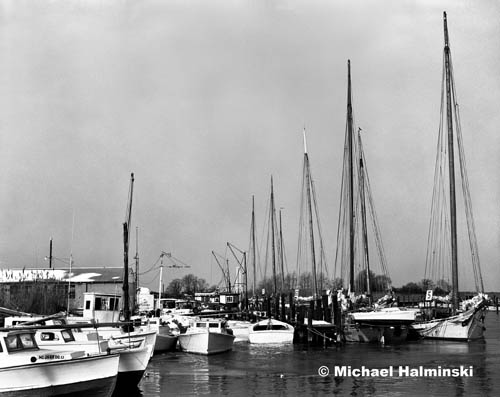
 

Narrows

Knapp’s Narrows at Tilghman Island, Maryland
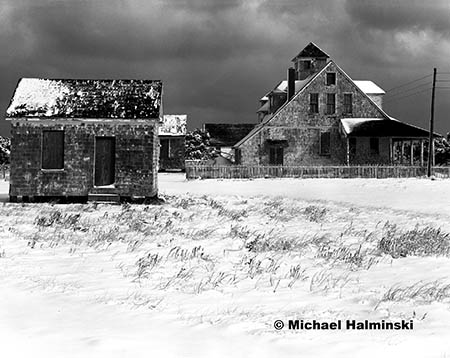
 

Chicamacomico

Chicamacomico Winter, 1980


snowdune

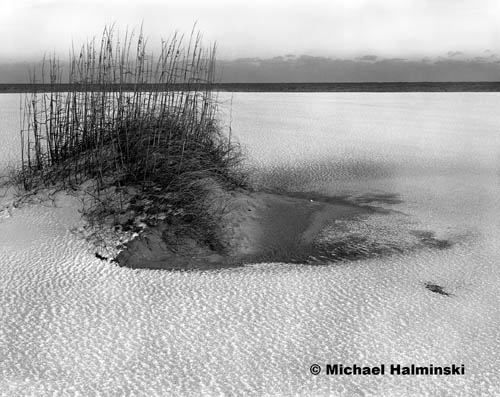
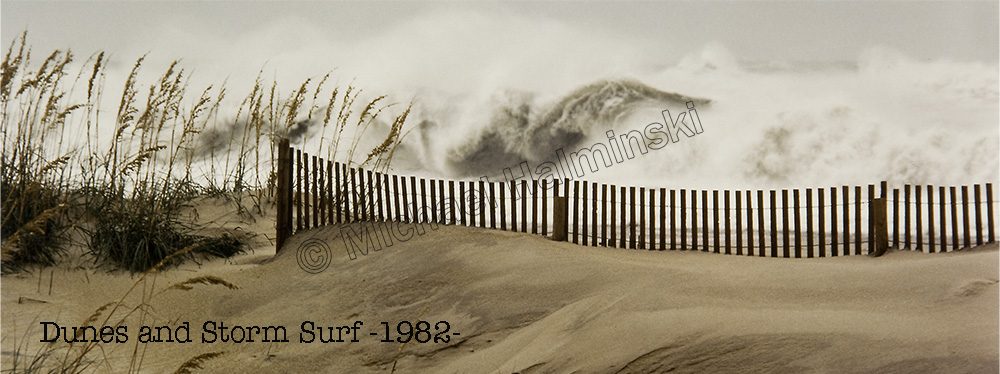
A Dune near Buxton


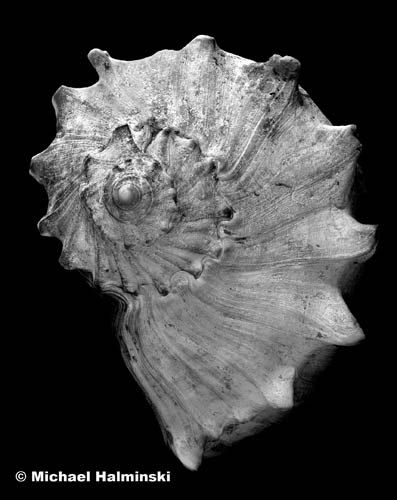
whelk

A Tribute to Weston


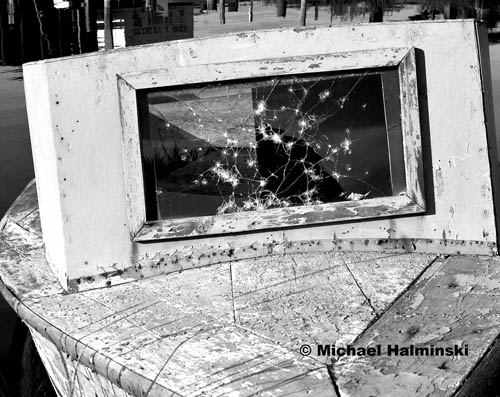
Glassx6

Broken Glass, Rodanthe Creek


I made about 60 Tri-X negatives, then decided to put the camera away. It was a lot of effort to use. And as photographer Ernst Haas, once told my class, shooting with a view camera was “like carrying the cross”. In a way, that wasn’t far from the truth. Besides at the time, it didn’t quite fit my style of shooting. I never even printed most of the images.


Then a few months ago, I found some negatives stored, with silica gel, in an old ammo box. For the past month, I’ve been making prints. Some beautiful 16×20’s too. I can’t tell you what a refreshing change it is from the popular digital shooting arena. Printing in black and white again is like finding an old long lost friend. Don’t be surprised if you see some new work from this old camera.
My Nights in Rodanthe


I have spent a few thousand nights in Rodanthe. As a young man, fresh out of college, I relocated there from Northern Virginia, via Bethany Beach, Delaware where I had befriended a small group of surfers. From there I made surfing trips to Hatteras, only to disappoint myself by returning to the mundane life up north. I was at an age where I was trying to find myself. Hatteras Island seemed like a great place to do just that, and besides I could surf beautiful waves while I did my thinking.

surfer

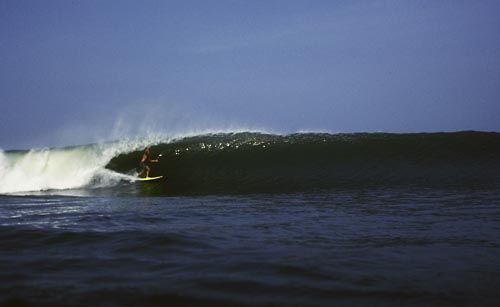
A perfect setup on a Rodanthe sand bar, compliments of hurricane Gabrielle.

In 1973, I moved into a small house with friends, Mike and Mary Jo, along with my best surfing buddy, Louie. Our landlords were Valton and Lovie Midgett. Close by, there was a great surfing break out on the “outside bar”. An old wrecked LST stabilized the bottom for the most consistent waves. The ride was much like surfing a point break. In those days, Rodanthe was relatively untouched by development, so a handful of us were the only ones there to enjoy the bounty. 

lovies

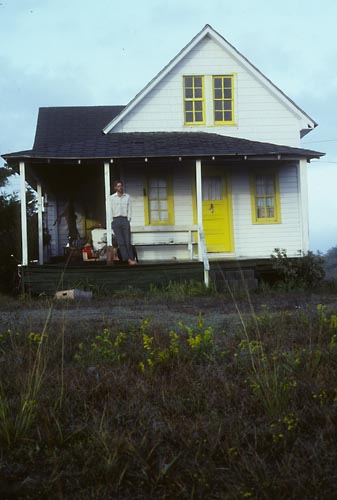
Valton and Lovie Midgett’s house.

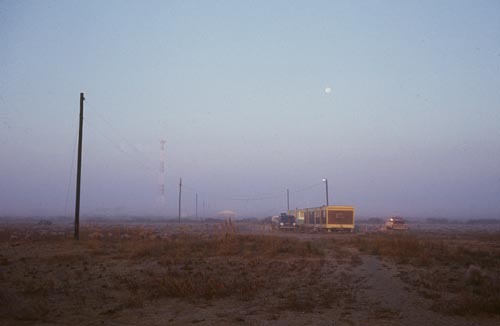
A few months later, Louie and I moved to a trailer in the adjacent town of Waves. We rented from a local man named Luke Midgett. His family roots were deeply planted there. Our trailer was in an open field at the oceanfront. We surfed our brains out, and worked odd jobs to pay our expenses, including rent of $150 a month, split 2 ways. It was a life close to the elements, and we loved it.  Today there’s nothing but rows of rental houses on the site. I lived there for almost 3 years until I relocated to Salvo, the town adjacent to Waves. 

lukes

Luke’s Village

Moving from one trailer to another trailer, this next one was newer and bigger, so I reserved the largest bedroom for my first official darkroom. Thus began my humble living as a photographer, even though it was part time. I honed other skills like woodworking, commercial fishing, and waterfowl hunting to get by. All along, I was teaching myself to make color prints, doing some shows and exhibits. Things were definitely picking up. This time I rented from a lady named Barbara Midgett. To help defray living expenses, my good friend BJ moved in some time later.

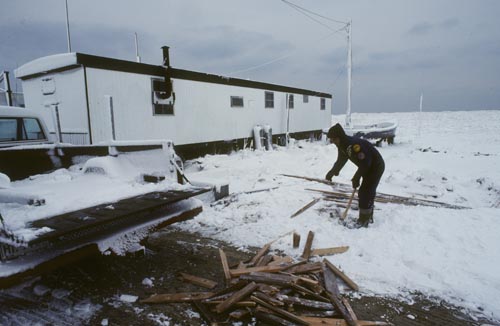
bj

BJ chopping for our preferred mode of heating. Wood was an abundant fuel source. It washed in on the beach and all we needed to do was to collect it.

After another 3 years, I found a larger house to rent in north Rodanthe. It was 1978. In the front rooms, I built a big darkroom with a gallery space next to it, then placed a sign out front on highway 12. I was open for business. Rodanthe, Waves and Salvo still was experiencing very little development. But now I was somehow able to pay most of my way with photography, and I loved taking pictures, printing and hanging them. I also loved the local people that lived there. 

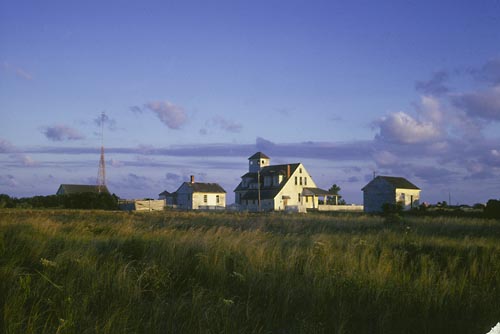
chicamacomico

The view from my bedroom window was the Chicamacomico Lifesaving Station, decommissioned in 1954.

My friend Robin, lived in a hundred year old house across the street. He hunted, fished and surfed much as I did. Mainstream America still had not discovered Rodanthe, Waves and Salvo. Life was good and uncrowded. We experienced storms, floods and big waves. A few surfing friends came down for visits. It was a simple, yet full and rewarding life. My photography gallery was working better and better, so I began “working” full time photographing the environment around me.

robin

Robin Gerald was my alter ego.

burgess

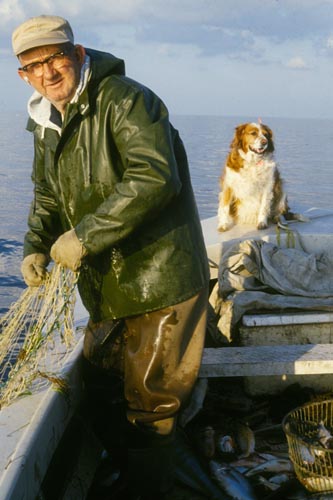
Burgess Hooper always fished with Princess.

surfshop

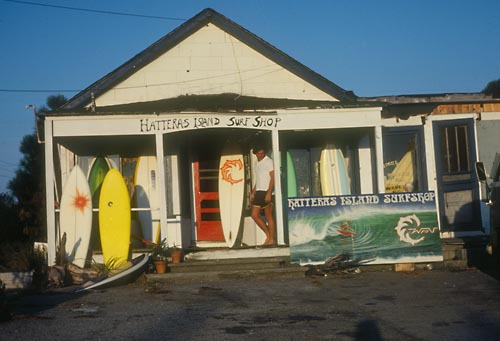
Barton Decker at the original Hatteras Island Surf Shop, circa 1978.

burt

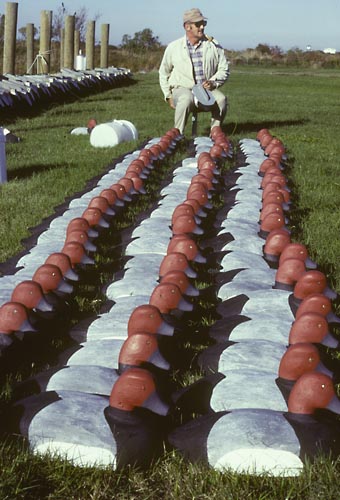
For about 5 years, I worked as a waterfowl hunting guide along side Burt Hooper. He learned the craft from his father, Ed. Here he ties off some of the 200 redhead duck decoys that I took 8 months to paint. It was gratifying to see dense flocks of waterfowl pitch in to these hunting rigs.

In 1985 I finally bought a piece of land from Miss Lillian Midgett. It was on the scenic Pamlico Sound side of the island. This is where I began plans to build my studio home. It was the beginning of the end of my nights in Rodanthe. But that is another chapter in my life.

The Henry Pigott House

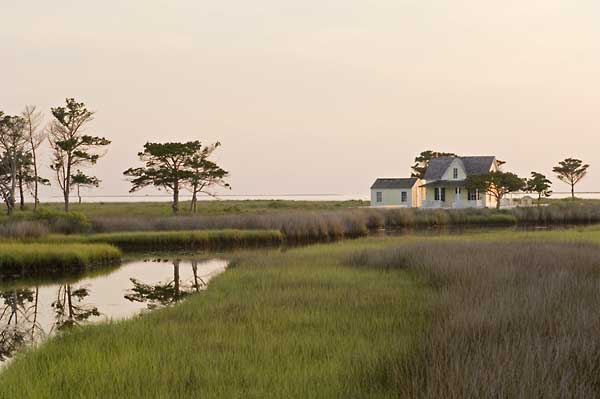
Another shot from my trip to Portsmouth Village, the Henry Pigott house image was taken just minutes prior to the Doctors Creek photo in my previous post. The image shows Doctors Creek looking in the opposite direction. The low light of sunrise was fleeting quickly, and didn’t last very long before turning to bright sunshine. Fortunately as that occurred, the mosquitoes became somewhat less voracious as well.