Category Archives: commercial fishing, boat, pamilco sound, gillnetting

My Nights in Rodanthe


I have spent a few thousand nights in Rodanthe. As a young man, fresh out of college, I relocated there from Northern Virginia, via Bethany Beach, Delaware where I had befriended a small group of surfers. From there I made surfing trips to Hatteras, only to disappoint myself by returning to the mundane life up north. I was at an age where I was trying to find myself. Hatteras Island seemed like a great place to do just that, and besides I could surf beautiful waves while I did my thinking.
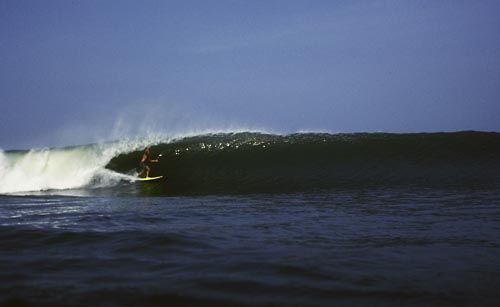
surfer

A perfect setup on a Rodanthe sand bar, compliments of hurricane Gabrielle.

In 1973, I moved into a small house with friends, Mike and Mary Jo, along with my best surfing buddy, Louie. Our landlords were Valton and Lovie Midgett. Close by, there was a great surfing break out on the “outside bar”. An old wrecked LST stabilized the bottom for the most consistent waves. The ride was much like surfing a point break. In those days, Rodanthe was relatively untouched by development, so a handful of us were the only ones there to enjoy the bounty. 
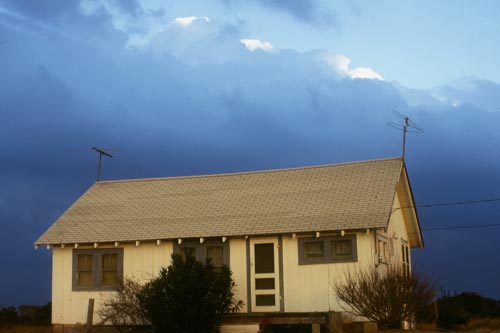
lovies

Valton and Lovie Midgett’s house.

A few months later, Louie and I moved to a trailer in the adjacent town of Waves. We rented from a local man named Luke Midgett. His family roots were deeply planted there. Our trailer was in an open field at the oceanfront. We surfed our brains out, and worked odd jobs to pay our expenses, including rent of $150 a month, split 2 ways. It was a life close to the elements, and we loved it.  Today there’s nothing but rows of rental houses on the site. I lived there for almost 3 years until I relocated to Salvo, the town adjacent to Waves. 
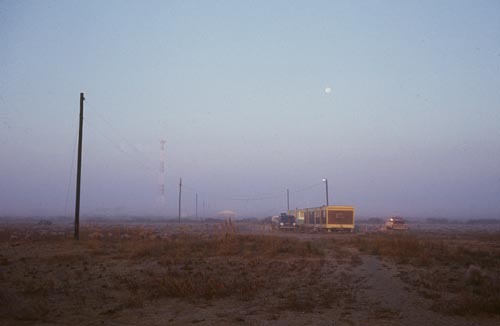
lukes

Luke’s Village

Moving from one trailer to another trailer, this next one was newer and bigger, so I reserved the largest bedroom for my first official darkroom. Thus began my humble living as a photographer, even though it was part time. I honed other skills like woodworking, commercial fishing, and waterfowl hunting to get by. All along, I was teaching myself to make color prints, doing some shows and exhibits. Things were definitely picking up. This time I rented from a lady named Barbara Midgett. To help defray living expenses, my good friend BJ moved in some time later.
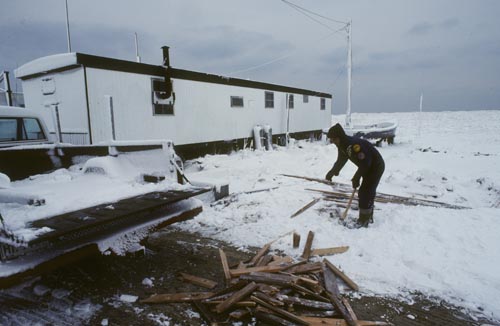
bj

BJ chopping for our preferred mode of heating. Wood was an abundant fuel source. It washed in on the beach and all we needed to do was to collect it.

After another 3 years, I found a larger house to rent in north Rodanthe. It was 1978. In the front rooms, I built a big darkroom with a gallery space next to it, then placed a sign out front on highway 12. I was open for business. Rodanthe, Waves and Salvo still was experiencing very little development. But now I was somehow able to pay most of my way with photography, and I loved taking pictures, printing and hanging them. I also loved the local people that lived there. 
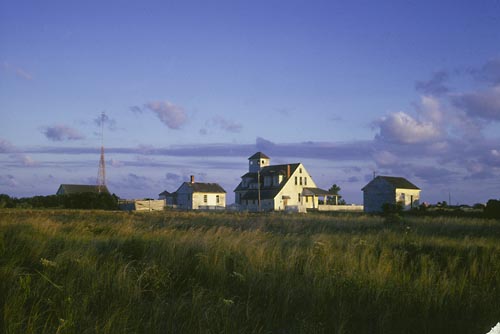
chicamacomico

The view from my bedroom window was the Chicamacomico Lifesaving Station, decommissioned in 1954.

My friend Robin, lived in a hundred year old house across the street. He hunted, fished and surfed much as I did. Mainstream America still had not discovered Rodanthe, Waves and Salvo. Life was good and uncrowded. We experienced storms, floods and big waves. A few surfing friends came down for visits. It was a simple, yet full and rewarding life. My photography gallery was working better and better, so I began “working” full time photographing the environment around me.
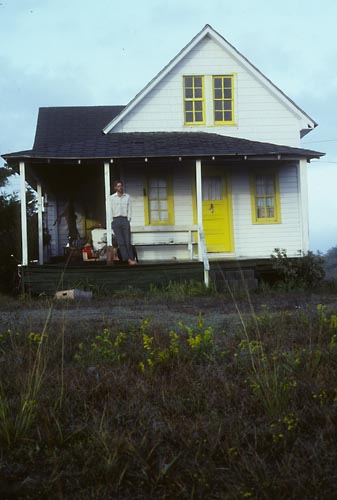
robin

Robin Gerald was my alter ego.

burgess

Burgess Hooper always fished with Princess.
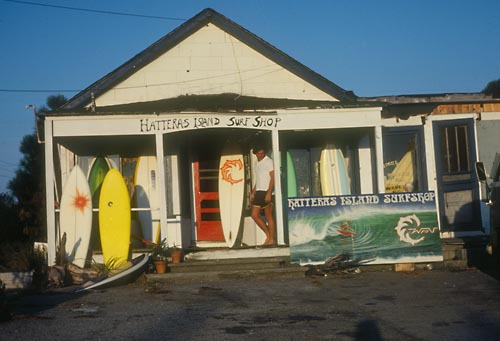
surfshop

Barton Decker at the original Hatteras Island Surf Shop, circa 1978.
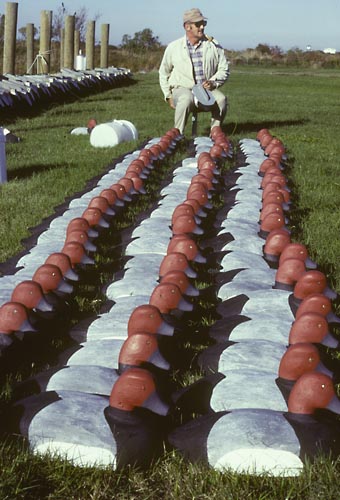
burt

For about 5 years, I worked as a waterfowl hunting guide along side Burt Hooper. He learned the craft from his father, Ed. Here he ties off some of the 200 redhead duck decoys that I took 8 months to paint. It was gratifying to see dense flocks of waterfowl pitch in to these hunting rigs.

In 1985 I finally bought a piece of land from Miss Lillian Midgett. It was on the scenic Pamlico Sound side of the island. This is where I began plans to build my studio home. It was the beginning of the end of my nights in Rodanthe. But that is another chapter in my life.
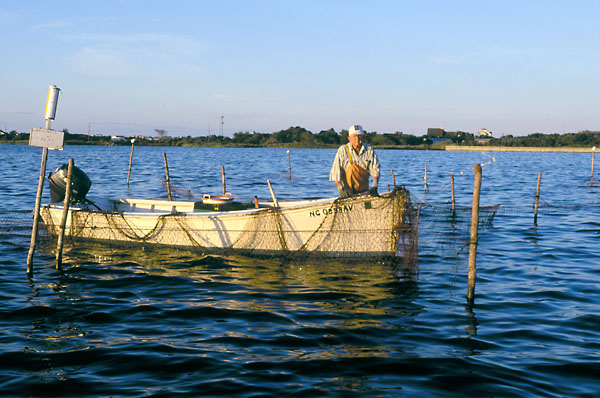
Tribute to a Hatterasman


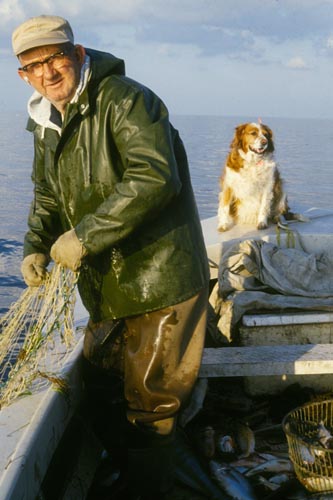
The first time I saw Nacie Peele was in an oil painting owned by a former employer, Alex Kotarides. Alex owned a waterfowl hunting club where I helped out in the maintenance and guiding chores. The large painting showed him mending a fishing net, and I would stand there transfixed with that image. It evoked a wonderful maritime quality and tranquility. I had heard nothing but good stories about Nacie. Ever since I moved to Hatteras Island, I was amazed at the commercial fishing way of life, and over the years, I’ve worked, using photography to document this vanishing lifestyle.

Some years later, I was shooting a magazine assignment involving Michael Peele fishing his pound net. It was a pretty day, and the fishing not particularly great. But I got my pictures, and we headed back to shore. On the way in, we spotted another fisherman working a pound net. It was Michael’s uncle Nacie, and we went over to check his catch. I was excited that this man at nearly 80 years old was still out in his skiff, pulling nets. I remember thinking to myself, here he is, a quintessential Hatterasman, the real thing. I made several more shots, and we went in.

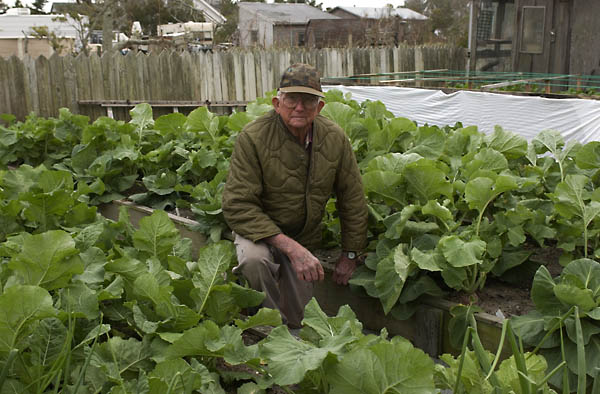
Ever since then, I’d stop in to visit Mr. Nacie occasionally. He always remembered my name and had such a gentle, welcoming demeanor. His stories told of an interesting life, from surviving a torpedoed ship in the war, hauling in hundreds of boxes of fish from a pound net, and building boats. He did eventually stop fishing in his mid-80’s, but was still sharp and tended a magnificent vegetable garden.


Nacie passed away peacefully on January 16 not many yards away from the spot where he was born. He was 89 years of age.


Weather Phenomena

The initial days of August on Hatteras Island, we experienced many short-lived thunder storms, almost daily. In the routine of digital photo editing, more than once I found myself not trusting my surge protector, shutting the computer system down and pulling the plugs.

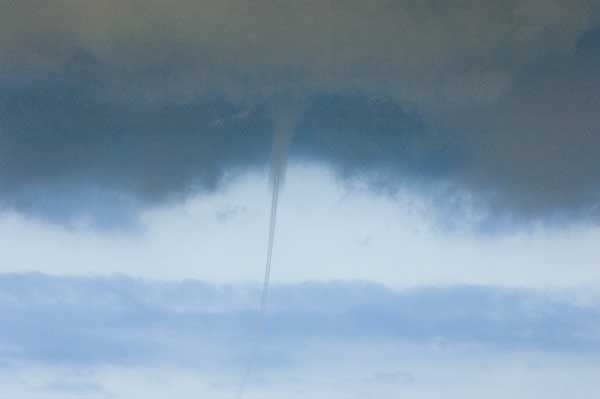
Early Sunday morning the 10th, I awoke and gazed out on the Pamlico Sound from my bedroom window. There I saw an ominous frontal system approaching. One cloud had a spike hanging from the bottom, and in a matter of minutes there was a slender waterspout spinning down to the water. It was however very brief, as I drove my truck north to follow its progress. As suddenly as it appeared, it vanished.

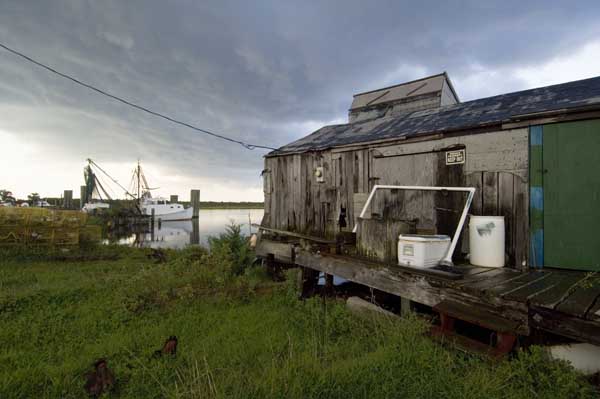
The storm clouds remained, and I drove around looking for dramatic images. I do this a lot spontaneously. Sometimes it pays off. Most of the time, it doesn’t. I pulled into an area locally known as the “Rodanthe Creek”. This is a place where much of the commercial fishing activity has taken place over the years. With the passage of time this usage has dwindled significantly. For years, I considered “the creek” to be a center of cultural activity. Most of the fish houses, where the daily catches came in, are gone. Now there is only one left, and it is utilized very little. I used to love taking pictures there, and today I made some shots that made me nostalgic. I could almost feel the excitement and activity of days gone by. Today I was glad to see a shrimp boat tied up to the dock.

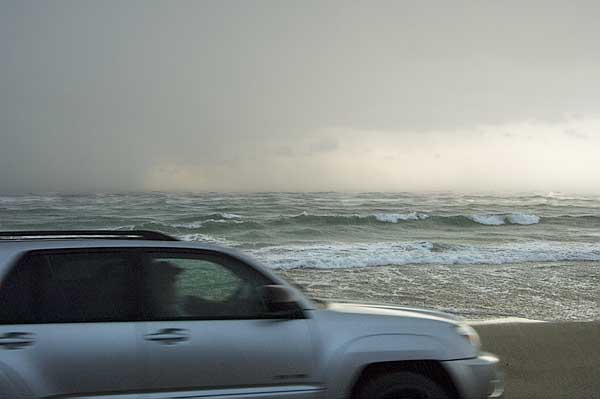
A short time later the weather cleared, only to have another heavy squall come down from the north, slightly offshore. I headed over ramp 23 to access the beach. There was a dramatic wall of rain moving south, and blowing a gale. With the adverse conditions, I couldn’t get out of my vehicle. I rolled down the window, took a quick shot. As I pressed the shutter a second time, a vehicle unexpectedly passed right in front of my picture. My initial reaction was that this “accidental tourist” ruined my beach scape.

I rolled up the window, and sat in my truck. The wind and rain intensified. Suddenly lightning bolts were striking all around me. Foolishly, I had a false sense of security in my truck. Then the hail stones began pelting the beach. That’s when I decided to head back home. It was just another day at the office.

To see my waterspout shots from 2005, follow this link.

http://outer-banks.com/halminski/waterspouts.cfm

I.D. Midgett

Id Gillnetting

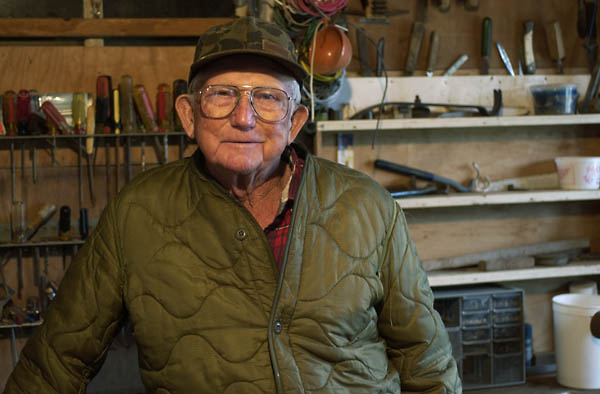
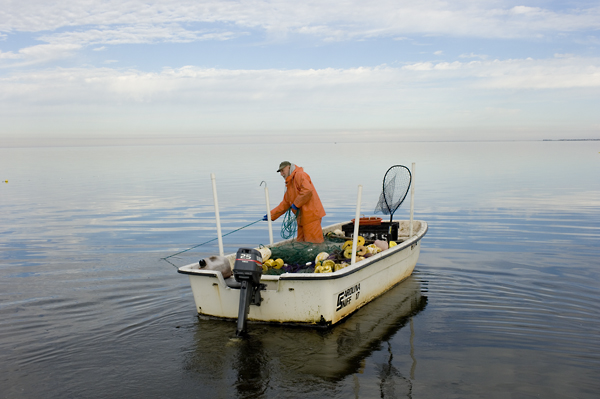
This is my good friend and neighbor I.D. Midgett. He has been on the water his entire life. When I moved to Hatteras Island in 1973, many people there made their living commercial fishing. It’s a very physical and difficult occupation and is highly regulated. Commercial fishermen are close to nature and the weather. Their lives revolve around it. Nowadays tourism and real estate development have taken over. Very few locals are fishing for their livelihoods any more. Like many of our traditional cultures, this one is being lost.