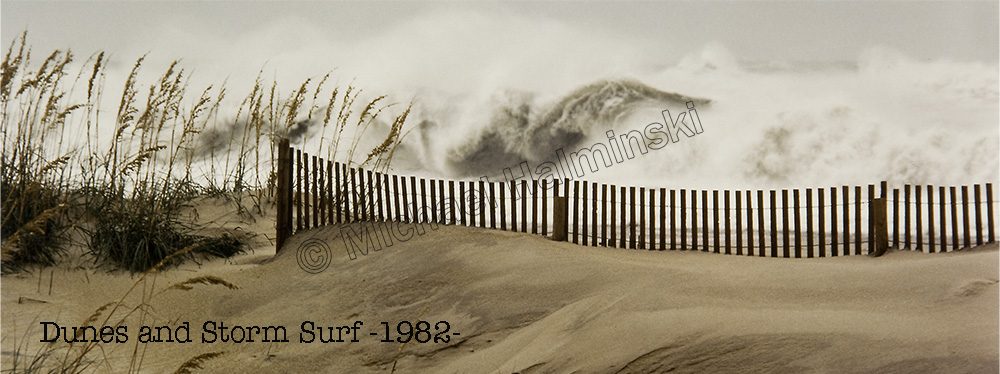
I am an admirer of some of the great masters of early photography. It was not only their vision that made the work great, but in many cases, the types of equipment used. They didn’t have the huge array of advanced cameras to choose from, like we do today. Things were a lot more primitive.
One of my favorite early photographers is Edward Weston. He shot with an 8×10 view camera. Can you imagine a finished 8 inch by 10 inch negative? His black and white prints are exquisite, and have a tonal quality and sharpness that is hard to describe. In 1978, I had the pleasure of attending a photography workshop in Carmel, California, where I studied under his son, Cole.
Working in 35mm, I could see the superior quality of large format photography. I examined gallery prints made by Ansel Adams, Edward Weston and his sons Brett and Cole, among others. When I got back home on the east coast, I wanted to apply some large format in my own work. View cameras are expensive. But when I saw an ad in American Photographer for a kit to build my own 4×5 view camera, I jumped at the chance. For $85, it included the lens plate, ground glass, bellows, shifts and tilts, everything except a lens. My friend Allen Jones who was attending RIT at the time, scored my Ilex Acuton 215mm lens for $250 in Rochester.
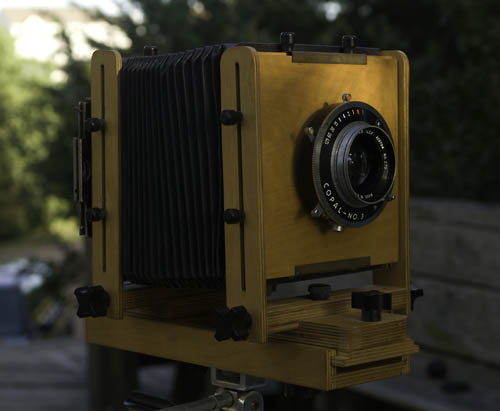
The assembled 4×5 view camera kit, designed by architect, Les Fader
Using the finished camera became a learning experience, and I made some mistakes. There were issues with light leaks between the film holders and the camera, and sheet film developing techniques, but I eventually kinda got the hang of it. On the windy, often stormy conditions of the Outer Banks, the bulky view camera has it limitations. So I used it mainly for still life compositions around commercial fishing harbors.
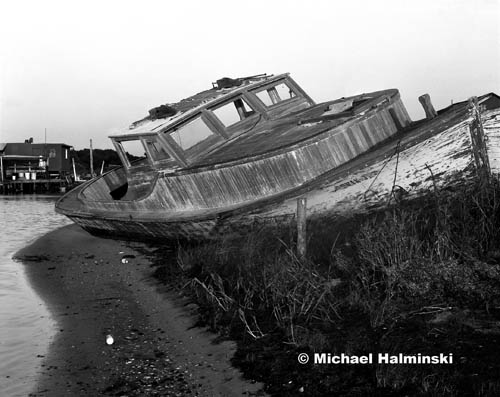
The “Edwin Jr.” derelict at Avon Harbor
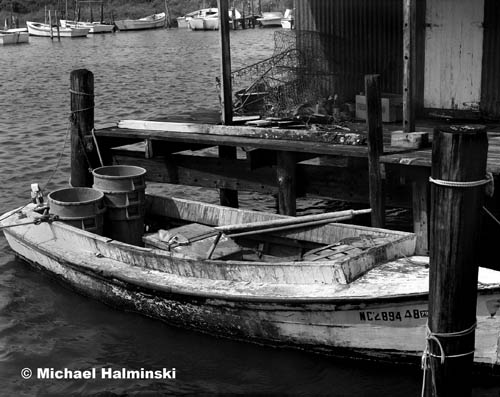
Crab Skiff at Avon Harbor
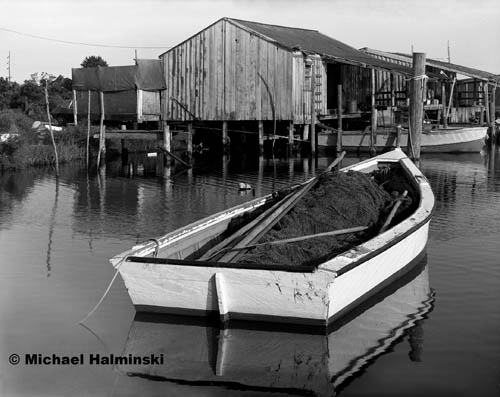
Net Skiff, Rodanthe Creek
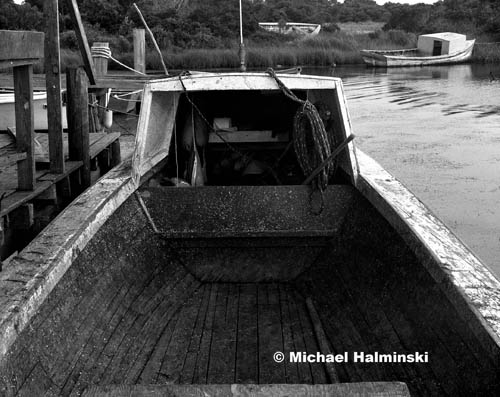
Shad Boat, Rodanthe Creek
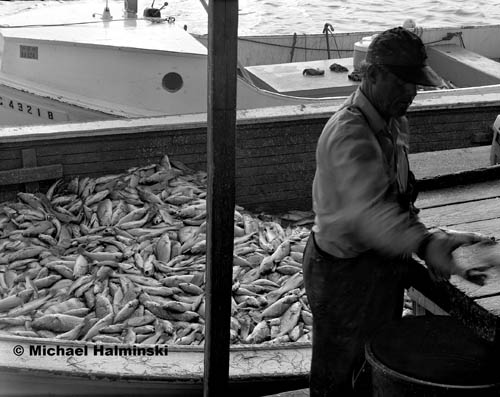
Longhauler, Collins Gray at Rodanthe Fish House
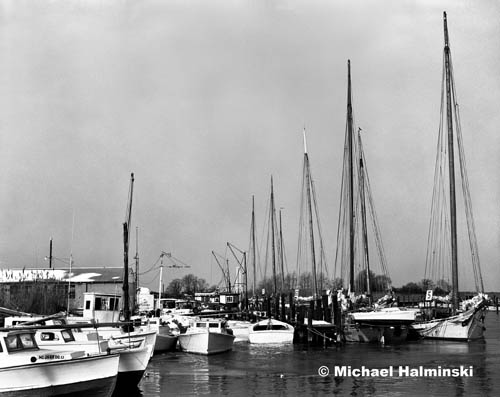
Knapp’s Narrows at Tilghman Island, Maryland
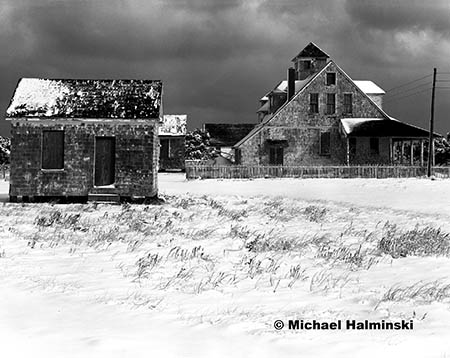
Chicamacomico Winter, 1980
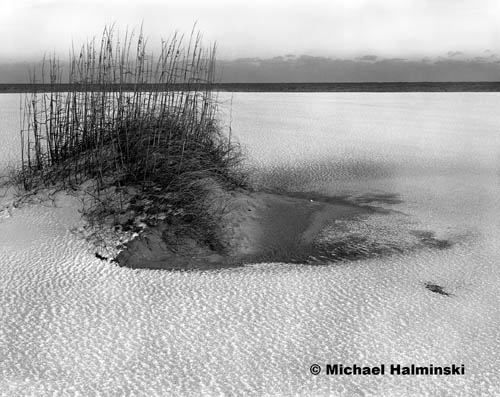
A Dune near Buxton
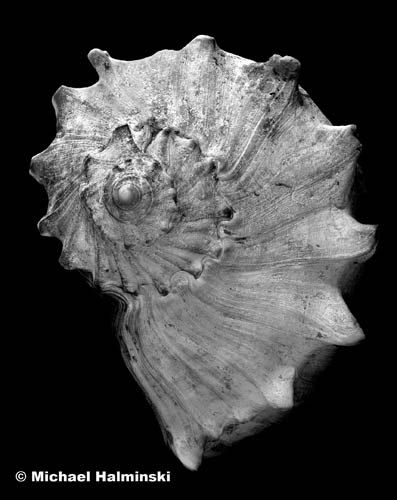
A Tribute to Weston
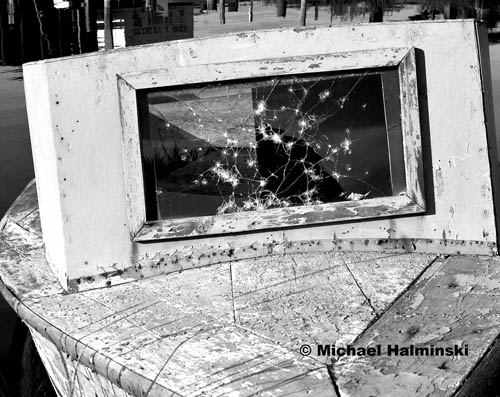
Broken Glass, Rodanthe Creek
I made about 60 Tri-X negatives, then decided to put the camera away. It was a lot of effort to use. And as photographer Ernst Haas, once told my class, shooting with a view camera was “like carrying the cross”. In a way, that wasn’t far from the truth. Besides at the time, it didn’t quite fit my style of shooting. I never even printed most of the images.
Then a few months ago, I found some negatives stored, with silica gel, in an old ammo box. For the past month, I’ve been making prints. Some beautiful 16×20’s too. I can’t tell you what a refreshing change it is from the popular digital shooting arena. Printing in black and white again is like finding an old long lost friend. Don’t be surprised if you see some new work from this old camera.
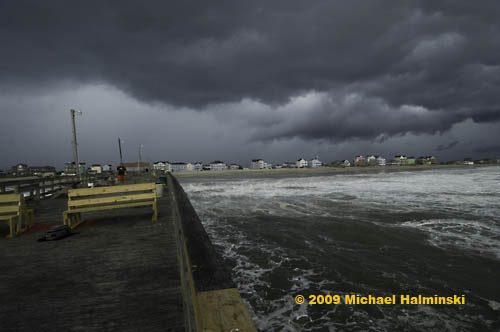
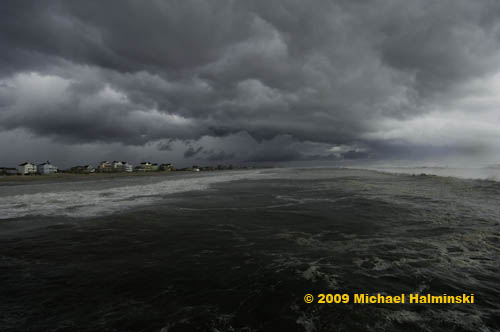
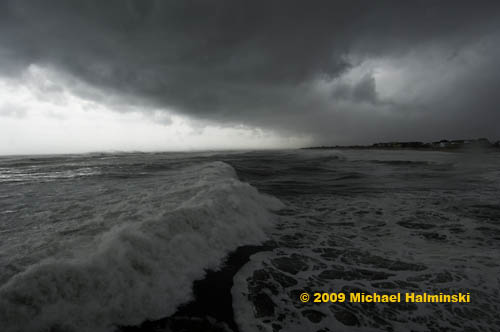
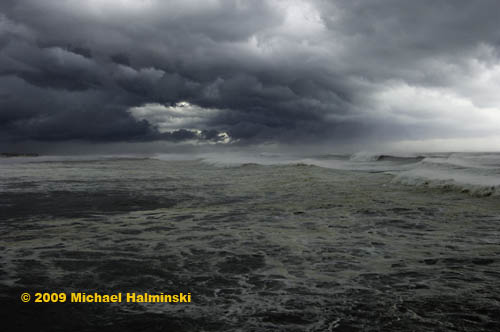
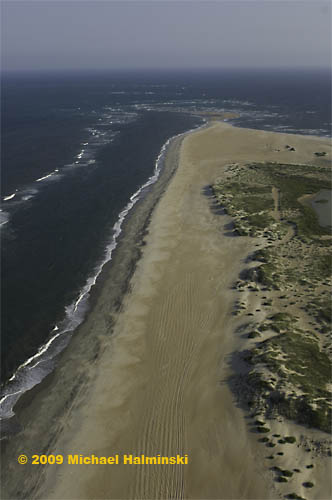
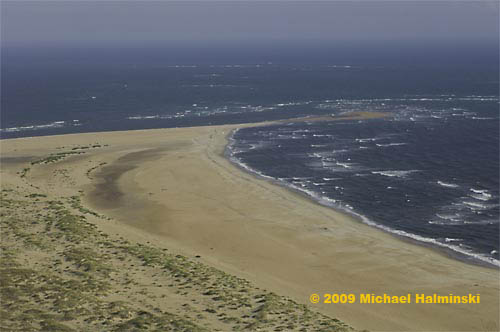 Looking out to Cape Point from the south or “the hook” side.
 Looking toward the point from the north beach.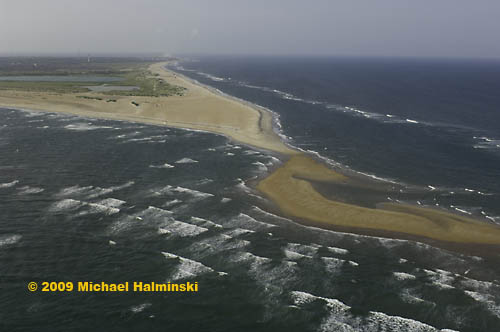
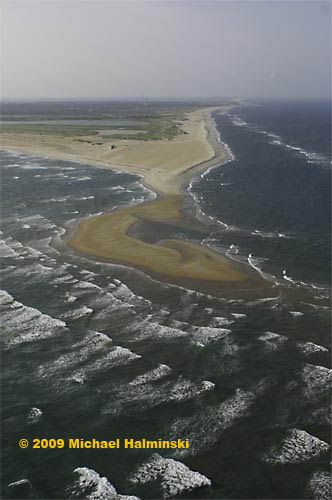 Looking toward the Cape Hatteras Lighthouse from over the Point.
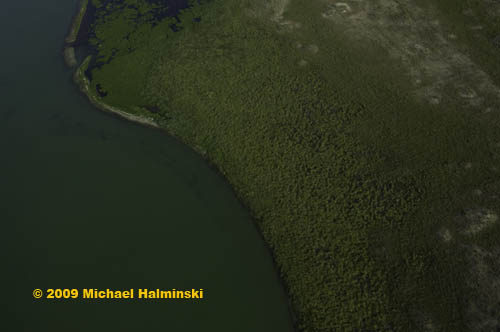 The shoreline of the pond at Cape Point.
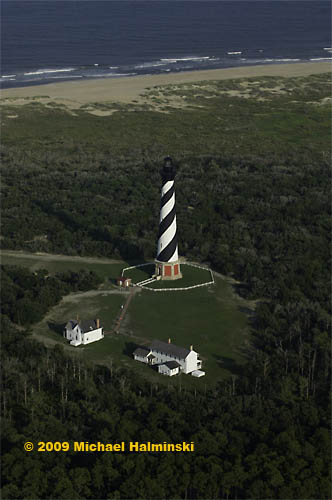 No flight is complete without a lighthouse fly-by.
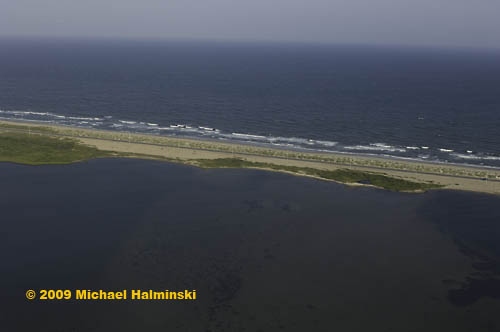 This is the site of the inlet that was cut by Hurricane Isabel.
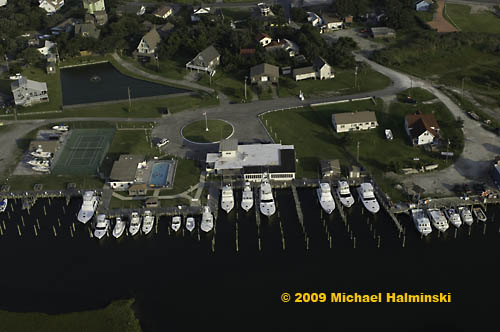 The famous Hatteras Marlin Club in Hatteras Village.
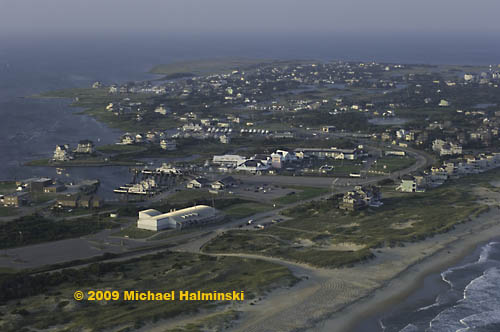 The south end of Hatteras Village at the ferry terminal to Ocracoke Island.
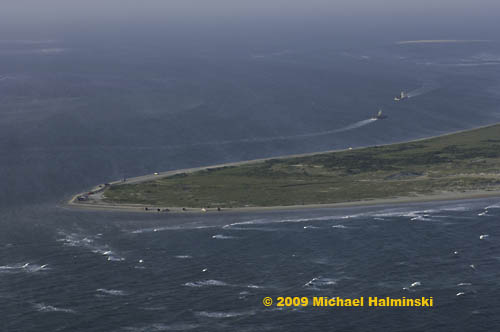 The south point of Hatteras Island at Hatteras Inlet looking to Pamlico Sound.
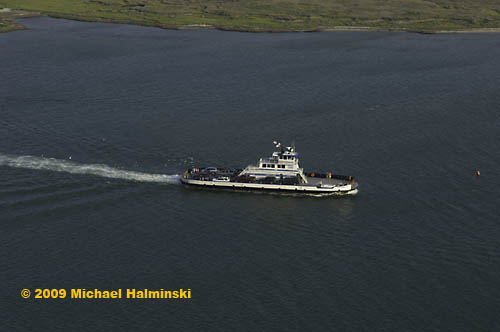 The ferry, Chicamacomico, en route to Ocracoke from Hatteras.
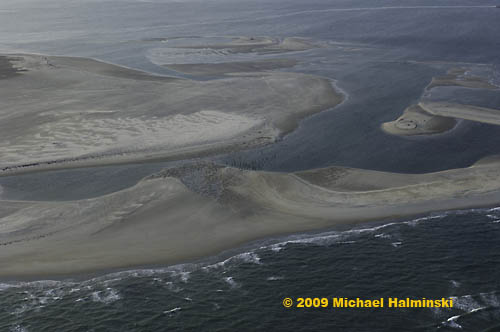 The north end of Ocracoke Island at the site of the former Hatteras Inlet Coast Guard Station. The station was destroyed in storms. All that remains are the pilings. This illustrates the lack of stability of barrier island systems.
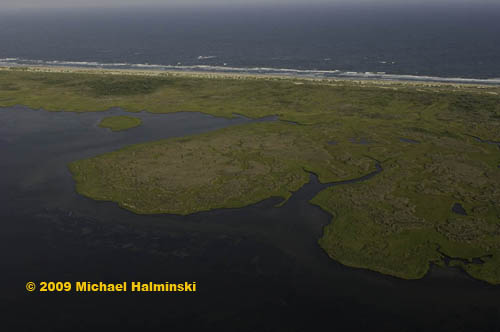 Ocracoke Island from the sound side.
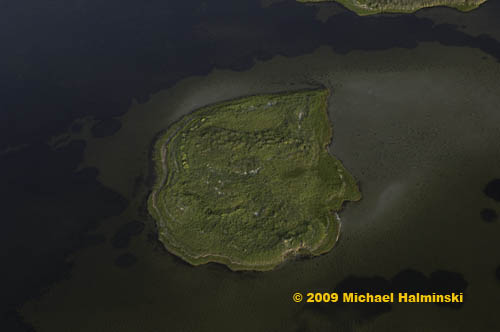 An island in the sound behind Ocracoke Island.
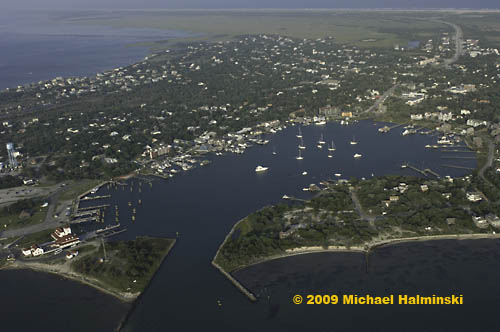 Silver Lake surrounded by scenic Ocracoke Village.
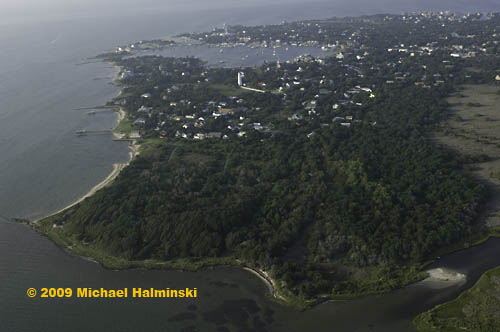 The beautiful maritime forest at Springer’s Point on Ocracoke.
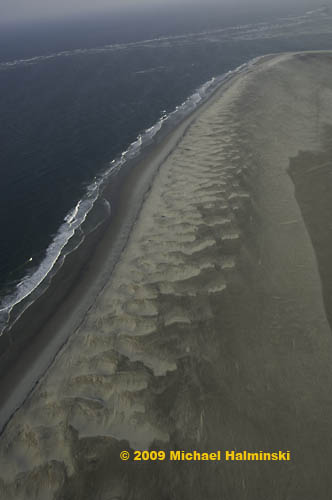 The untouched beach at Ocracoke’s South Point.
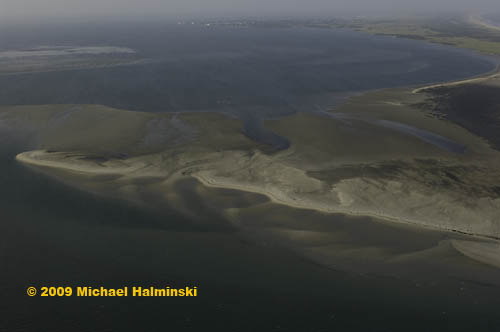 A sandbar where Ocracoke Inlet meets the Pamlico Sound.
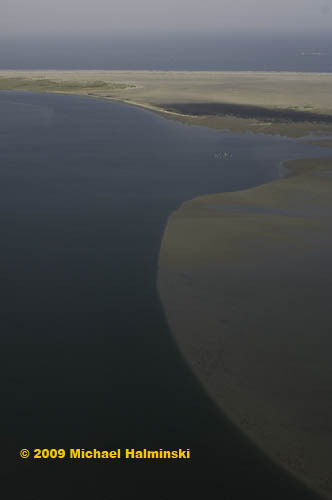 An underwater sand ridge extending into Pamlico Sound from Ocracoke Inlet.
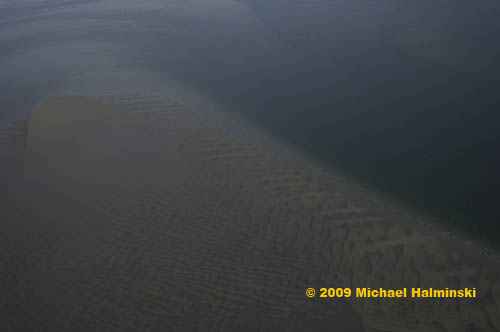 A sandbar in the Pamlico Sound near Ocracoke Inlet.
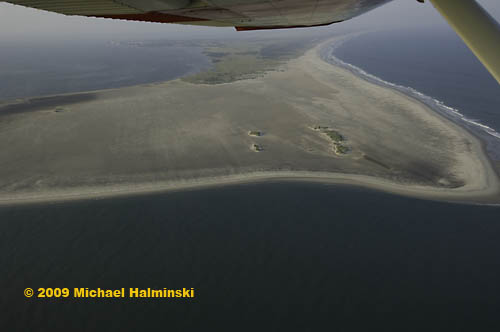 Dwight’s Cessna banking over Ocracoke Inlet for a shot at the untouched South Point.
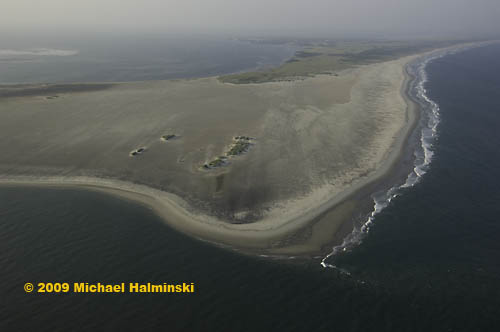 The South Point of Ocracoke in a pristine state from 1,000 feet.